


-
Scientific Organizers: Bruce Miller, Ana Maria Cuervo, and Brandy Matthews
Important Deadlines
Meeting Summary
Joint Meeting
This meeting runs jointly with Neural-Immune Interactions: Immune Modulation of CNS Biology.
About This Meeting:
Neurodegenerative diseases are among the costliest health conditions worldwide. Although diminishing risk factors for dementia, such as hypertension, physical inactivity, and obesity, are helping to reduce dementia rates in wealthier populations, the prevalence is rising in lower socioeconomic populations. Advances in basic science, paired with innovative clinical strategies, are starting to yield earlier diagnosis and intervention for Alzheimer’s disease (AD), non-AD dementias, and other neurodegenerative disorders. Building on this momentum, precision diagnosis, interventions around social determinants of health, and the discovery of novel disease-modifying therapies are beginning to further transform the field.
This Keystone Symposia conference on Neurodegeneration: From Mechanisms to Precision Diagnosis and Therapies will examine the biological mechanisms underlying neurodegeneration while highlighting advances in and new opportunities for precision diagnosis and therapeutic development. Sessions will explore genetic insights across diverse populations and new discoveries in the biology of protein misfolding, aggregation, degradation, and spreading for different molecular subtypes of pathogenic species. Advances in neurodegenerative diagnosis, such as from AI-based modeling, new blood-based biomarkers, and molecular imaging, will be highlighted, while areas in need of new biomarkers will be emphasized and new therapeutic approaches will be evaluated. Attendees will gain a comprehensive view of how emerging discoveries and technologies can be translated into improved patient outcomes.
By convening basic, translational, and clinical neuroscientists along with geneticists, computational biologists, and industry scientists to discuss advances, this meeting takes a broad approach to neurodegenerative conditions and should inspire crosstalk between researchers to advance new cross-disciplinary approaches and innovation. Joint programming with the Keystone Symposia conference on Neural-Immune Interactions: Immune Modulation of CNS Biology further enhances this cross-disciplinary exchange, reflecting the growing recognition of immune contributions to neurodegenerative disease.
Novel themes at this conference will probe the effect of social determinants of health on dementia outcomes and discuss new discoveries from basic biology around proteostasis, protein propagation, and degradation, advances in precision-molecule-based diagnosis, and new advances in clinical trials. The integration of mechanistic biology, precision diagnostics, and therapeutic innovation—combined with a joint meeting format—creates a unique environment for accelerating progress in neurodegenerative disease research.
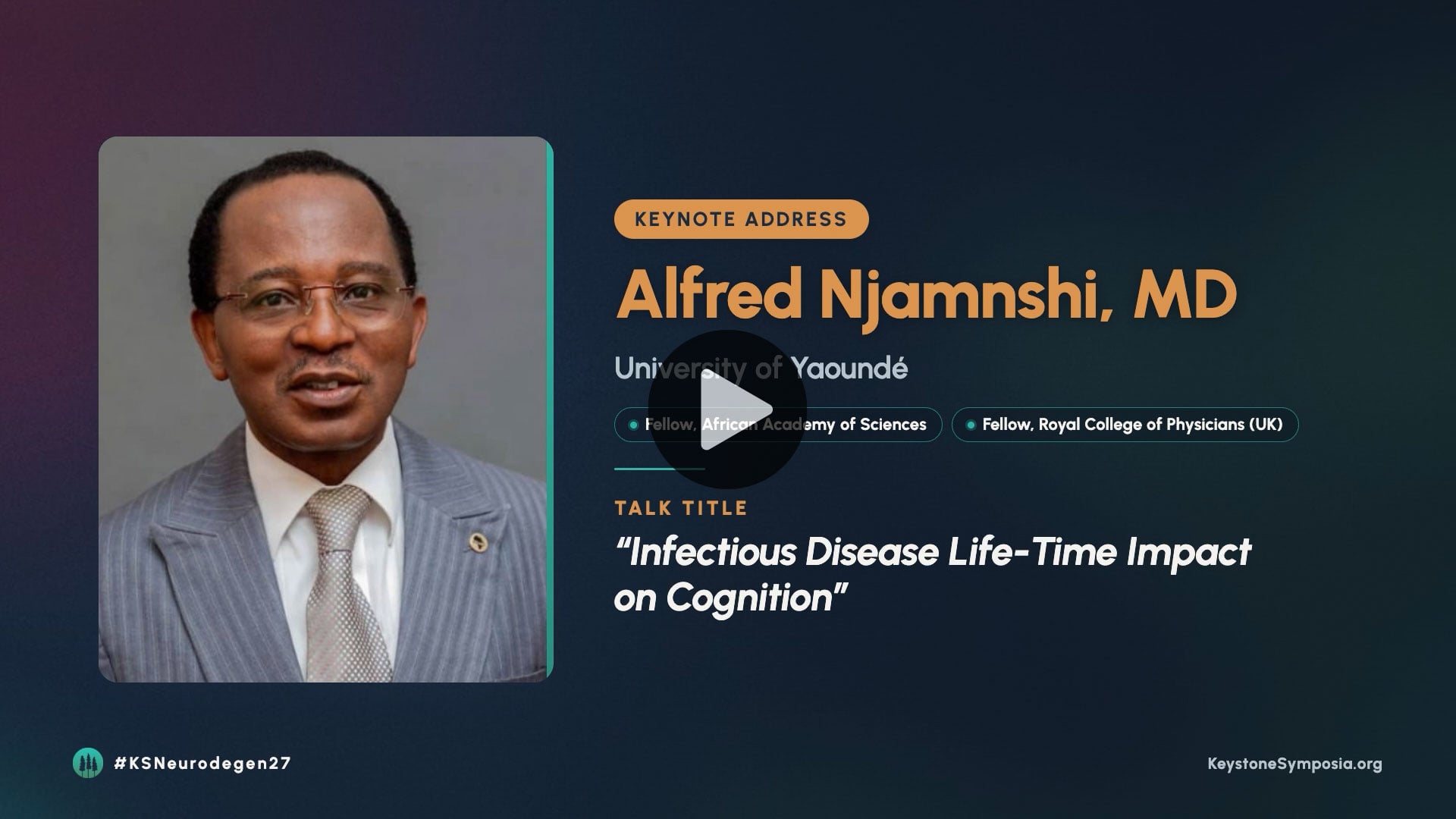
Check out the speaker highlights in the video below:
Unique Career Development Opportunities
This meeting will feature a Career Roundtable where trainees and early-career investigators will have the opportunity to interact with field leaders from across academic and industry sectors for essential career development advice and networking opportunities. Find out more about Career Roundtables here: https://www.keystonesymposia.org/diversity/career-development-initiatives