


-
Scientific Organizers: Irina Arkhipova, Samuel H Sternberg, Ting Wang, and Phillip D. Zamore
Important Deadlines
Meeting Summary
About This Meeting:
About half of the human genome and a significant fraction of most other genomes correspond to transposable elements (TEs). TE movements within and between genomes underlie changes in genome plasticity, regulation, and evolution. Recent advances in telomere-to-telomere genomes, metagenomes, 3D maps of genome organization, single-cell expression profiles, high-resolution macromolecular structures, and computational predictions of protein structures and interactomes have propelled TE research. New technologies based on RNA-guided DNA integration and target-primed reverse transcription have yielded novel strategies for genome engineering, and biotech companies are advancing these technologies toward the clinic.
This Keystone Symposia conference on Transposable Elements: From Evolution to Engineering will showcase the pervasive influence of TEs on nearly every developing area of biology. Plenary sessions will focus on structural and mechanistic aspects of transposition, TE evolution and genomics, genetic and epigenetic control mechanisms, TE-host interactions, disease and therapeutics, and TE applications for genome editing and engineering.
The conference will bring together TE biology experts and newcomers to the field, including evolutionary and population geneticists, microbiologists and virologists, ecologists and computational biologists, neuroscientists, structural and systems biologists, developmental and cell biologists, biopharmaceutical scientists, and clinicians. Jumpstarting collaborations across every aspect of TE biology is central to sustaining this confluence of ideas, data, and technologies.
This conference positions itself as a unique forum for supporting early-career researchers, offering career and meet-the-editor roundtables and a methods workshop to educate and inspire the next generation of leaders in the field.
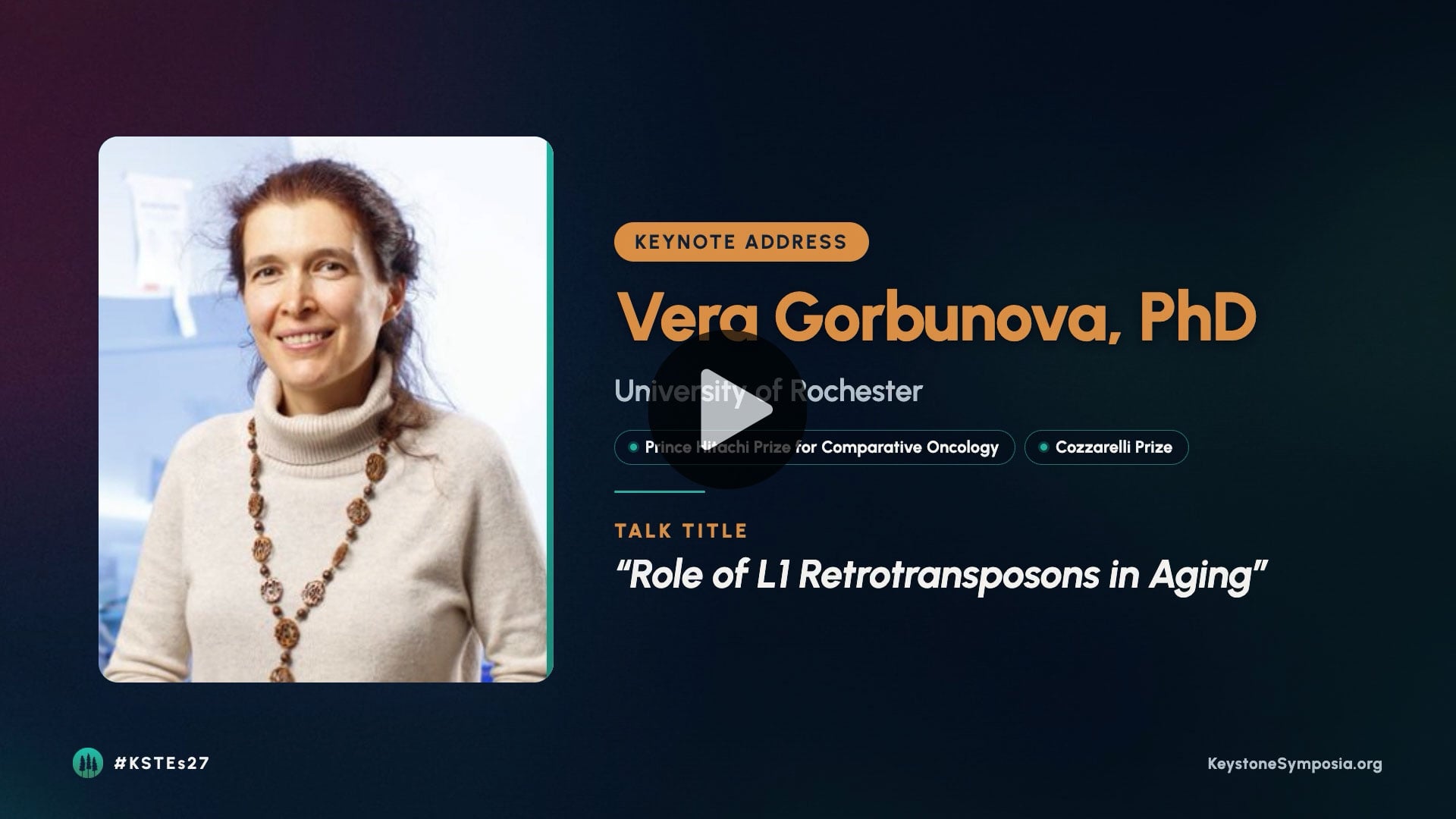
Check out the speaker highlights in the video below:
Unique Career Development Opportunities
This meeting will feature a Career Roundtable where trainees and early-career investigators will have the opportunity to interact with field leaders from across academic and industry sectors for essential career development advice and networking opportunities. Find out more about Career Roundtables here: https://www.keystonesymposia.org/diversity/career-development-initiatives